

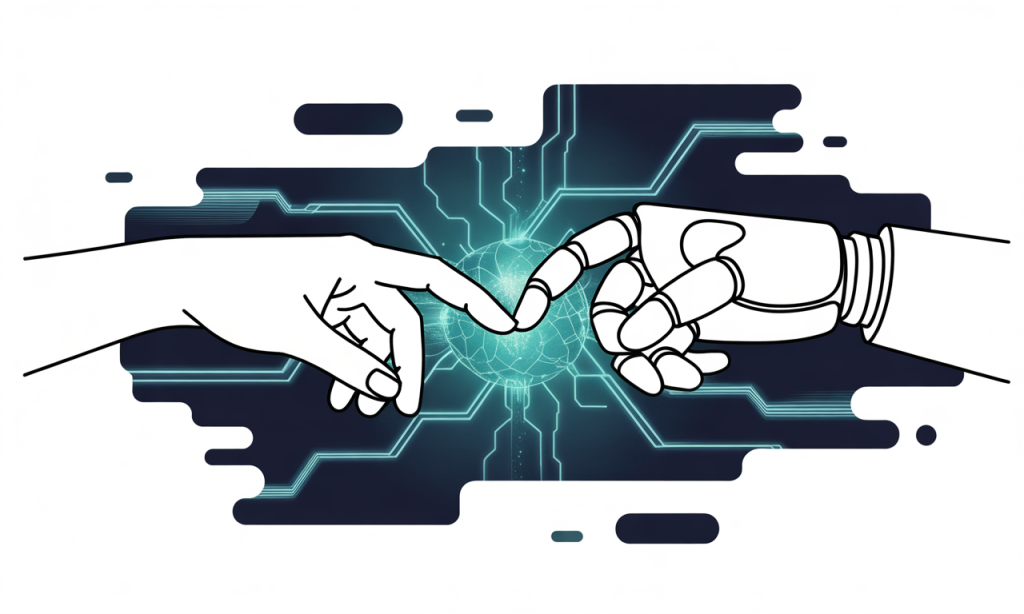
The skills Global Leaders need in the human–AI era
At the recent SIETAR SEA Conference, one insight rose above the rest: the future of work will not be shaped by technology alone, but by the quality of collaboration between humans and AI. The pace of change is rewriting how we communicate, make decisions, innovate, and work across cultures.
Gallup’s State of the Global Workplace 2025 report echoes the same message with urgency. As AI becomes woven into daily workflows, one truth is impossible to ignore:
The future is not Humans vs AI; it is Humans plus AI.
This shift is not just technical. It is behavioural. It is cultural. It is profoundly human.
And it is transforming what global leadership must become.
Why Global Leadership is being redefined?
Leaders today face a level of complexity not seen before: multicultural teams, hybrid work realities, global uncertainty, and rapid AI adoption. Expectations are rising fast, and the data is clear. Gallup reports that managers influence 70% of team engagement.
Tomorrow’s leaders will need to:
- Integrate AI responsibly and ethically
- Lead confidently across cultures, borders, and time zones
- Build trust through uncertainty and constant change
- Think systemically and navigate global interdependencies
- Prioritise psychological safety, wellbeing, and belonging
- Guide people through transformation, not simply manage tasks
And above all, leaders must elevate soft skills to the same level as technical capability.
In the Human–AI age, soft skills are no longer optional. They are the engine of effective leadership.
Skills like:
- Creative thinking
- Emotional intelligence (EQ)
- Coaching and mentoring
- Adaptability and resilience
These deeply human capabilities will define the leaders who thrive and the organisations that follow them.
Five essential skills leaders need in the Human–AI era
The Human–AI era is redefining what it means to lead. Technology is accelerating, cultures are intersecting faster than ever, and global workforce mobility is reshaping how organisations operate. For companies moving talent across borders, the stakes are even higher. The leaders who thrive will be those who strengthen their humanity, expand their cultural agility, and learn to collaborate with AI, not compete with it.
Cultural Intelligence (CQ)
AI does not remove cultural differences. It amplifies them. How people adopt AI, how much they trust it, and how they make decisions varies significantly across cultures. In the global mobility industry, this is especially evident: relocated employees, offshore teams, and diverse project groups all approach technology and change differently.
Leaders with high CQ can read these differences, bridge cultural gaps, and shape inclusive global mobility strategies that work in multiple markets. They also help reduce cultural bias in AI systems used for talent selection, relocation planning, or service delivery. CQ is no longer a nice-to-have; it is a strategic advantage.
Human–AI collaboration skills
AI will automate tasks, but it cannot replicate empathy, contextual judgement, relationships, or creativity. Leaders must design teams where people and AI complement each other, particularly in relocation settings where human reassurance, guidance, and cultural interpretation are essential.
With 40% of employees reporting daily stress (Gallup), AI can either relieve cognitive overload – by streamlining immigration workflows, analysing housing markets, or improving case management – or intensify it if poorly introduced. For mobility leaders supporting employees through high-stress transitions, human–AI collaboration is now a core competency.
Global systems thinking
AI is accelerating global interconnections, from supply chains and geopolitics to talent flows and digital ecosystems. For companies relocating people into new markets, leaders must understand how AI-driven shifts in one region can influence talent strategies, compliance requirements, or workforce expectations elsewhere.
Global systems thinkers can zoom out, see patterns, and anticipate ripple effects across borders. This mindset is becoming essential for managing mobile talent and designing mobility programs that remain resilient amid rapid technological and geopolitical change.
Ethical foresight and responsible innovation
AI introduces real ethical risk: bias, fairness, transparency, data protection, and cultural expectations of trust. In global mobility, these issues are amplified by cross-border data transfers, varying privacy expectations, and the need to safeguard the well-being of employees navigating major life transitions.
Future-ready leaders must be able to:
- Understand cultural expectations of fairness
- Protect the privacy of relocating employees
- Ensure AI supports human dignity during sensitive mobility processes
- Safeguard employee wellbeing, especially in high-stress or unfamiliar environments
Ethical foresight is not about avoiding risk; it is about setting the standard for responsible, culturally aware AI use.
Adaptive, inclusive, human-centred leadership
Gallup highlights growing strain on the global workforce:
- 40% experience daily stress
- Manager well-being is in decline
- Only 33% of people say they are thriving
For mobile employees adjusting to new cultures, workplaces, and social systems, these pressures can be even more pronounced.
This is why companies need leaders who prioritise humanity. Future-ready leadership requires:
- Emotional intelligence
- Coaching skills
- Adaptability and resilience
- The ability to create psychological safety across cultures
- Communication that is clear, calm, and empathetic
Leadership is no longer about having the answers. It is about orchestrating the right people, the right technology and the right perspectives, across borders.
In conclusion
AI will not replace leaders.
But leaders who embrace AI, elevate their humanity, and lead confidently across cultures, and across countries, will replace those who do not.
Ready to build a culturally agile leader?
If your company is ready to break through cultural barriers and build new leadership and teams’ skills, our training programs are the perfect next step.
Contact us today to discuss how we can support your team.